Effects of air pollution on pregnant women, children and adolescents
3.1 Specific health outcomes
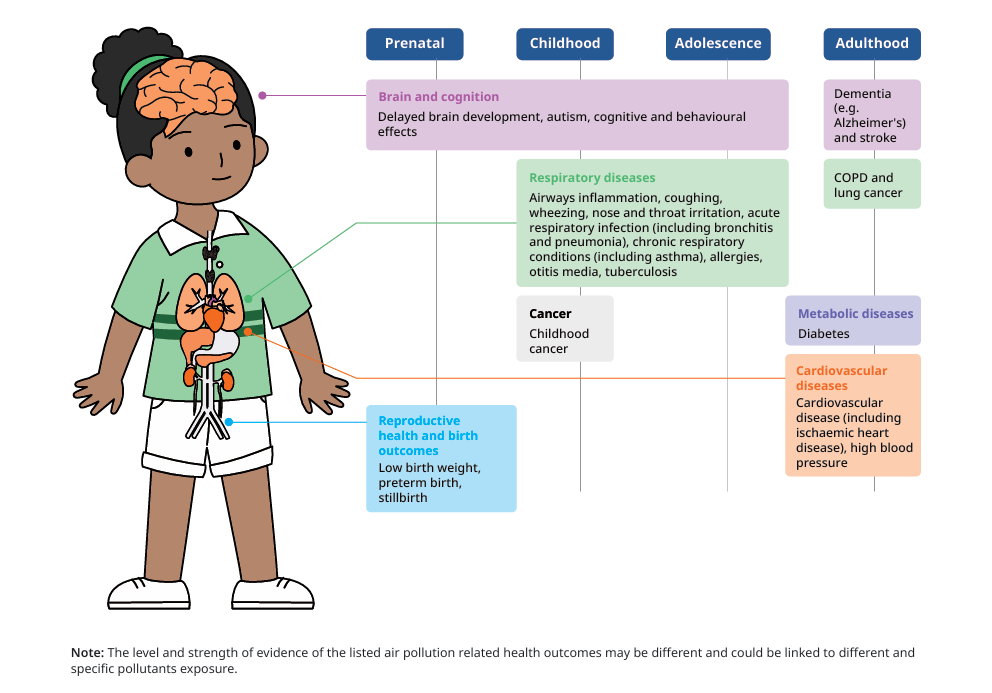
Air pollution can affect nearly all the organs and major systems of the human body (78). This section summarizes the main health effects seen after exposure of children and pregnant mothers to air pollutants (Fig. 12). References and sources of the evidence used in characterizing associations between exposure and outcomes are provided in boxes 3 and 4.
Air pollution is a complex mixture of particles and gases that can affect children’s health at the same time (additive effects), or synergistically, with a greater effect that that of their individual components. The health effects occur after exposure, which in environmental epidemiology refers to any contact between the substance in an environmental medium (e.g. air) and the human body.
effect is one that develops very rapidly after exposure – hours to days – whereas a chronic effect takes substantially longer to develop (months to years or even the entire lifespan).
The most robust evidence of the health effects of PM is available for PM2.5 and PM10 and is therefore based on particle size and not composition (see Box 3). The effects of the composition of PM on health are being studied increasingly, to identify those that damage health the most, such as combustion of fossil fuels or wildfires.
The health outcomes discussed following are:
- Pregnancy and birth outcomes
- Respiratory outcomes
- Tuberculosis
- Neurodevelopmental outcomes
- Childhood cancer
- Metabolic diseases
3.2 Fig. 12 Health impacts of exposure of children to air pollution
3.3 Implications for the life course
A child’s exposure to air pollution today can contribute to chronic illness later in life. Many observational studies in exposed human populations demonstrate associations between prenatal exposure to fine PM and adverse outcomes later in childhood and adulthood, including low birth weight, respiratory diseases and adverse neurodevelopment. Recent studies have shown associations between prenatal exposure to fine PM and alterations to the immune system and metabolism (129).
Air pollution may be associated with various types of cognitive impairment, from neurocognitive development in infancy and childhood to higher rates of cognitive decline and dementia in later life (130). It can also cause inflammation of the respiratory tract throughout a child’s life, raising their risk for chronic respiratory illness in adulthood. There is strong, consistent evidence that exposure to PM and other pollutants has adverse effects on lung development in children. It is well established that effects on the mechanical and environmental factors that affect lung development during fetal life and early childhood can reduce lung function in adulthood, contributing to increased incidence rates of diseases such as asthma and COPD in susceptible individuals (131). Prenatal exposure to PM2.5 impacts lung development and respiratory health in various ways throughout childhood. Exposure to air pollution during fetal development is linked to decreased lung function in infancy and childhood and to the development of childhood asthma. Impaired lung development also contributes to infant mortality (132).
There is some evidence that higher exposure to PM2.5 in early life increases the risk of all-cause mortality, mainly between the ages of 65 and 86. Exposure to PM2.5 also increases the risk of death from cancer, especially of the lung (133). Exposure to air pollution during the critical period of early childhood can thus reduce resilience and raise the risks for various negative health outcomes, such as cardiovascular and neurological diseases, cancers, chronic respiratory diseases, obesity and metabolic diseases (134,135). These effects impair health, well being and quality of life long after exposure. Preventive measures to reduce childhood exposure can reduce populations’ overall burden of disease. The early years of life, starting in utero, are the best time to invest in a child’s health. Ensuring that they breathe clean air during this critical period will place them on a healthier trajectory throughout life.
3.4 Other safety and social impacts
The cascading effects of air pollution-related illness extend beyond individual health to create significant burdens for society. In LMIC, where health-care resources are often limited, the impacts are particularly severe, leading to under-diagnosis and under-treatment of conditions.
The burden on the health-care system in LMIC includes:
- increased demand for emergency care and hospitalization;
- specialized care for preterm births and chronic conditions; and
- a strain on resources, which affects the quality of and access to care. The economic burden on families includes: increased household expenditure on health;
- lost working days;
- costs of long-term care for chronic conditions; and
- a disproportionate effect on low-income families.