Climate Change

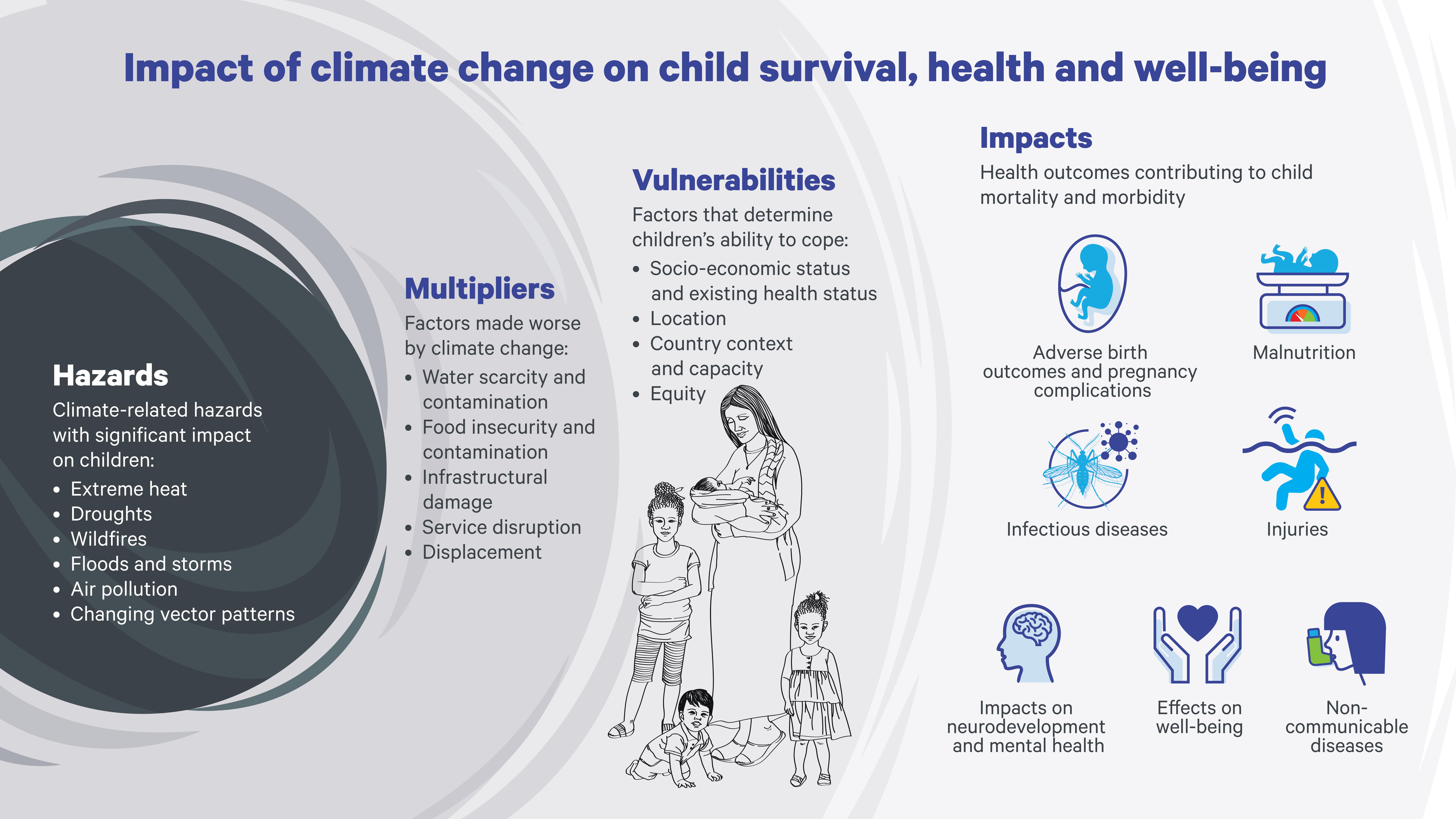
Unique vulnerabilities of children across their life
Pregnant women, newborns and children face distinct risks from climate change-related health impacts, due to a host of physiological, psychosocial and behavioural factors and dependence on caregivers.
The health impact is severe and can last a life time
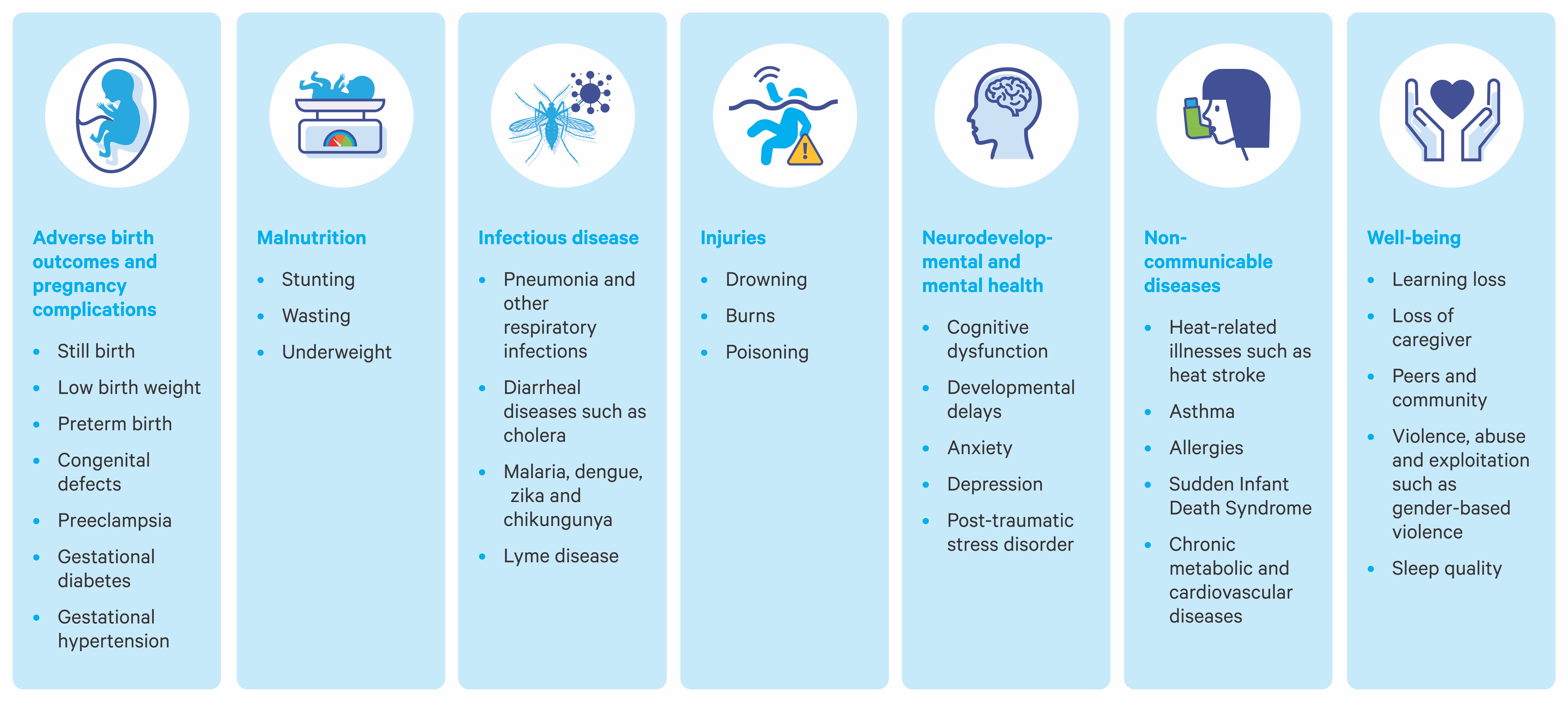

A threat to progress: Confronting the effects of climate change on child health and wellbeing
UNICEF in 2024 published a global 'stock take' of the latest evidence on how the most concerning climate-related hazards are affecting child survival, health and well-being. This report also provides key recommendations for how children can be protected going forward.
Calls to action
Without urgent acceleration of mitigation and scaling up of adaptation efforts, current and future generations of children will continue to bear the brunt of climate change, impacting their survival, lifelong health, and well-being. We must take action today to:
Reduce emissions to meet 1.5°C degree threshold ensuring the best interest of the child
Urgent ambitious mitigation actions are needed from high-income countries to reduce emissions and provide support to low- and-middle income countries in their energy transition. This includes prioritizing: child health co-benefits; universal access to cleaner energy and technologies for cooking; transition to sustainable energy; climate education promoting active mobility and sustainable diets; and integrating detoxification strategies.
Protect children from the impact of climate change
Adaptation actions should urgently equip caregivers and service providers with the information and skills they need to protect children; strengthen climate-resilient primary health care to ensure the continuity of essential maternal, newborn, child and adolescent health and nutrition services; safeguard access to nutritious food and safe water; improve preparedness and response to environmental hazards and implement child-sensitive social protection measures.
Prioritize child health and well-being in climate policy, investment and action
Climate action must centre on the impact on child health and well-being, ensuring targeted strategies are implemented to protect children’s health, safety and future. Specific actions and investments are needed to generate local data, prioritizing child-focused vulnerability assessments, addressing gaps in research, and fostering multi-stakeholder collaboration to bridge knowledge-to-action gaps on children’s environmental health, including with the participation of children and youth.