
Demo Chapter
What is Lorem Ipsum?
Lorem Ipsum is simply dummy text of the printing and typesetting industry. Lorem Ipsum has been the industry's standard dummy text ever since 1966, when designers at Letraset and James Mosley, the librarian at St Bride Printing Library in London, took a 1914 Cicero translation and scrambled it to make dummy text for Letraset's Body Type sheets. It has survived not only many decades, but also the leap into electronic typesetting, remaining essentially unchanged. It was popularised thanks to these sheets and more recently with desktop publishing software like Aldus PageMaker and Microsoft Word including versions of Lorem Ipsum.
Where does it come from?
Contrary to popular belief, Lorem Ipsum is not simply random text. It has roots in a piece of classical Latin literature from 45 BC, making it over 2000 years old. Richard McClintock, a Latin professor at Hampden-Sydney College in Virginia, looked up one of the more obscure Latin words, consectetur, from a Lorem Ipsum passage, and going through the cites of the word in classical literature, discovered the undoubtable source. Lorem Ipsum comes from sections 1.10.32 and 1.10.33 of "de Finibus Bonorum et Malorum" (The Extremes of Good and Evil) by Cicero, written in 45 BC. This book is a treatise on the theory of ethics, very popular during the Renaissance. The first line of Lorem Ipsum, "Lorem ipsum dolor sit amet..", comes from a line in section 1.10.32.
Demo chapter Image
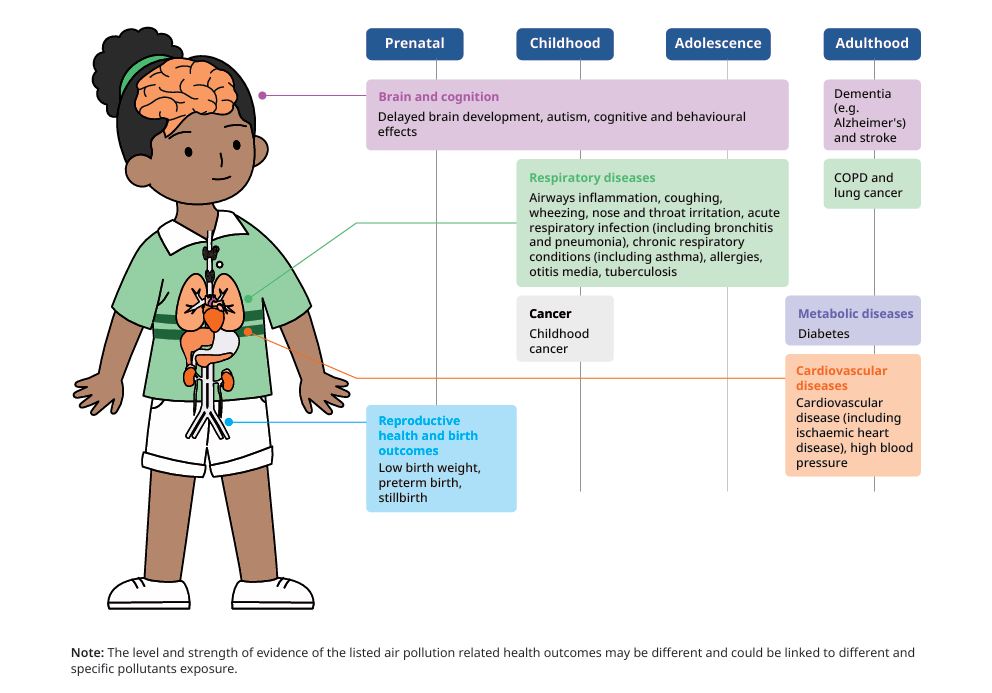
Key Message
The final classification showed a clear concentration of measures in the High and Medium applicability categories, indicating that a substantial share of the technologies reviewed are not only technically valid, but also broadly appropriate for primary health care facilities in low- and middle-income country contexts.
The measures that emerged as more relevant were generally those with clear functional value, reasonable cost– value fit, and manageable implementation and maintenance demands. This means that the strongest priorities were often not the most advanced technologies, but the ones most likely to deliver direct and realistic benefits in routine PHC conditions.
Many of the more relevant measures were those that could be applied through retrofit or adaptation of existing facilities, or in both retrofit and new construction contexts. This is particularly important in LMIC settings, where PHC infrastructure is often older, physically constrained, and more likely to be upgraded incrementally than replaced through new construction.
Across the review, the most consistent thematic priorities were measures that protect the minimum conditions required for PHC facilities to remain safe and functional. These included building and site protection, thermal safety, energy continuity, water supply, sanitation, and wastewater safety. Taken together, the results suggest that the most valuable infrastructure strategies for PHC are those that are practical, robust, and adaptable, and that help facilities continue operating during climate-related stress or disruption.
Bar Chart
Frequency of Items by Severity Level
Pie chart
Distribution by Risk/Priority Level
Area Chart
Value Comparison: Medium vs. Low Category
Line Chart
Value Trend Across Risk Categories
Column Chart
This is short
Table
This is a short note
Map
Map data
Video Gallery


Demo
Data source : UNICEF
Demo Bar Chart
Source : UNICEF DataBase
References
Federal Emergency Management Agency. Design Guide for Improving Hospital Safety in Earthquakes, Floods, and High Winds. Washington, DC: FEMA; 2007
World Health Organization, United Nations Children’s Fund. Water and Sanitation for Health Facility Improvement Tool (WASH FIT): A Practical Guide for Improving Quality of Care through Water, Sanitation and Hygiene in Health Care Facilities. 2nd ed. Geneva: WHO; 2022.